
Epithalon X 20mg
Regular price
Rs. 11,421
- Unit price
- per
 100% Authentic
 Made in USA
 Authorised distributor
 1-5 Days delivery

Epithalon X 20mg
Regular price
Rs. 11,421
- Unit price
- per
Price includes all duties and taxes
SKU: EPIT-20MG
FMI's Choice
Epithalon (also known as Epitalon) is a synthetic tetrapeptide (Ala-Glu-Asp-Gly) derived from the natural pineal peptide epithalamin. It has been studied extensively in longevity and aging research for its role as a bioregulator of cellular processes.
Mechanistic Claims
- Telomerase Activation: Stimulates telomerase activity, enabling elongation and maintenance of telomeres, the protective caps at the ends of chromosomes.
- Telomere Length Regulation: Shown to preserve or extend telomere length in preclinical models, potentially delaying cellular senescence.
- Pineal Gland Modulation: Influences melatonin secretion and circadian rhythm regulation, contributing to systemic anti-aging effects.
- Antioxidant & Anti-Aging Pathways: Reduces oxidative stress markers and supports mitochondrial function.
- Gene Expression Regulation: Modulates expression of genes associated with stress resistance, apoptosis, and DNA repair.
Research Applications
- Longevity and anti-aging studies
- Telomere biology and telomerase modulation
- Circadian rhythm and pineal gland function
- Oxidative stress and mitochondrial resilience
- DNA repair and genomic stability investigations
Epithalon Research Insights
Epithalon (also spelled Epitalon) is a synthetic tetrapeptide consisting of four amino acids: Alanine-Glutamic Acid-Aspartic Acid-Glycine (Ala-Glu-Asp-Gly). It was developed and primarily studied in Russia by researchers at the St. Petersburg Institute of Bioregulation and Gerontology.
The peptide was designed to mimic epithalamin, a natural extract from the pineal gland. Its key characteristics include:
-
Purported anti-aging properties
-
Potential to stimulate production of telomerase (an enzyme that can help maintain telomere length)
-
Possible regulation of melatonin production and circadian rhythms
-
Studies suggesting effects on immune function
Most research on Epithalon has been conducted in Russia, with some animal studies showing potential lifespan extension effects.
Telomere Dynamics and Telomerase Activity
Epithalon has been shown to activate telomerase in various cell types. Studies indicate that Epithalon can induce the expression of the telomerase catalytic subunit and enhance its enzymatic activity, leading to telomere elongation in human somatic cells. This activation of telomerase suggests a potential mechanism by which Epithalon may prolong the lifespan of cells and possibly the organism as a whole1.
Research demonstrates that Epithalon can significantly retard cellular senescence by reducing telomere shortening and promoting telomere elongation. In aging models, Epithalon-treated cells showed increased telomere length and extended proliferative potential, effectively overcoming the Hayflick limit, which is the typical division limit of somatic cells2.
Longevity and Anti-Aging Effects
Epithalon has been shown to increase the lifespan of various organisms. In mice, it increased the lifespan of the last 10% of survivors by 13.3% and the maximum lifespan by 12.3%3. In Drosophila melanogaster, it extended lifespan by 11-16% at very low concentrations4.
Epithalon can retard cellular senescence by reducing telomere shortening and increasing telomerase activity, which helps prolong cell lifespan5. It decreases the frequency of chromosome aberrations, indicating an antimutagenic effect that may contribute to its geroprotective properties6.
In oocytes, Epithalon reduces reactive oxygen species and improves mitochondrial function, which may delay aging processes7. In older primates, Epithalon has been shown to restore age-related hormonal imbalances, such as increasing melatonin levels and improving glucose metabolism8.
Epithalon influences gene expression related to aging and stress responses, potentially through interactions with DNA9.
Antioxidant Properties
Epithalon has been shown to reduce intracellular ROS levels, which are harmful byproducts of cellular metabolism that can lead to oxidative stress and cellular damage10. This reduction in ROS is associated with improved mitochondrial function and decreased apoptosis in aging oocytes, suggesting a protective role against cellular aging7.
Studies indicate that Epithalon’s antioxidant properties can surpass those of melatonin in certain contexts. While both compounds are produced by the pineal gland, Epithalon not only acts as a direct antioxidant but also stimulates the production of antioxidant enzymes, providing a broader protective effect10.
Tumor Inhibition
Epithalon has demonstrated significant inhibitory effects on the development of spontaneous mammary tumors in HER-2/neu transgenic mice. Studies show that Epithalon treatment reduces both the cumulative number and size of tumors, and decreases the number of mice with multiple tumors11.
In rat models, Epithalon has been shown to inhibit colon carcinogenesis induced by 1,2-dimethylhydrazine (DMH). The peptide reduces the number and size of colon tumors, particularly when administered throughout the carcinogenesis process12.
The antitumor effects of Epithalon are partly attributed to its ability to downregulate oncogene expression, such as HER-2/neu in mammary tumors11.
References
-
Khavinson, V., Bondarev, I., & Butyugov, A. (2003). Epithalon Peptide Induces Telomerase Activity and Telomere Elongation in Human Somatic Cells. Bulletin of Experimental Biology and Medicine, 135, 590-592. https://doi.org/10.1023/A:1025493705728.
-
Shi-Liang, T. (2007). Retarding the cellular senescence by Epithalon and changes of telomere length and telomerase activity in the retarding process. Journal of Chongqing College of Education.
-
Anisimov, V., Khavinson, V., Popovich, I., Zabezhinski, M., Alimova, I., Rosenfeld, S., Zavarzina, N., Semenchenko, A., & Yashin, A. (2004). Effect of Epitalon on biomarkers of aging, life span and spontaneous tumor incidence in female Swiss-derived SHR mice. Biogerontology, 4, 193-202. https://doi.org/10.1023/A:1025114230714.
-
Khavinson, V., Izmaylov, D., Obukhova, L., & Malinin, V. (2000). Effect of epitalon on the lifespan increase in Drosophila melanogaster . Mechanisms of Ageing and Development, 120, 141-149. https://doi.org/10.1016/S0047-6374(00)00217-7.
-
Khavinson, V., Bondarev, I., Butyugov, A., & Smirnova, T. (2004). Peptide Promotes Overcoming of the Division Limit in Human Somatic Cell. Bulletin of Experimental Biology and Medicine, 137, 503-506. https://doi.org/10.1023/B:BEBM.0000038164.49947.8c.
-
Rosenfeld, S., Togo, E., Mikheev, V., Popovich, I., Zabezhinskii, M., Khavinson, V., & Anisimov, V. (2002). Effect of Epithalon on the Incidence of Chromosome Aberrations in Senescence-Accelerated Mice. Bulletin of Experimental Biology and Medicine, 133, 274-276. https://doi.org/10.1023/A:1015899003974.
-
Yue, X., Liu, S., Guo, J., Meng, T., Zhang, X., Li, H., Song, C., Wang, Z., Schatten, H., Sun, Q., & Guo, X. (2022). Epitalon protects against post-ovulatory aging-related damage of mouse oocytes in vitro. Aging (Albany NY), 14, 3191 – 3202. https://doi.org/10.18632/aging.204007.
-
Goncharova, N., Vengerin, A., Khavinson, V., & Lapin, B. (2005). Pineal peptides restore the age-related disturbances in hormonal functions of the pineal gland and the pancreas. Experimental Gerontology, 40, 51-57. https://doi.org/10.1016/j.exger.2004.10.004.
-
Khavinson, V., & Malinin, V. (2005). Gerontological Aspects of Genome Peptide Regulation. . https://doi.org/10.1159/isbn.978-3-318-01193-7.
-
Kozina, L., Arutjunyan, A., & Khavinson, V. (2007). Antioxidant properties of geroprotective peptides of the pineal gland.. Archives of gerontology and geriatrics, 44 Suppl 1, 213-6 . https://doi.org/10.1016/J.ARCHGER.2007.01.029.
-
Anisimov, V., Khavinsov, V., Alimova, I., Provintsiali, M., Manchini, R., & Francheski, K. (2002). Epithalon Inhibits Tumor Growth and Expression of HER-2/neu Oncogene in Breast Tumors in Transgenic Mice Characterized by Accelerated Aging. Bulletin of Experimental Biology and Medicine, 133, 167-170. https://doi.org/10.1023/A:1015555023692.
-
Anisimov, V., Khavinson, V., Popovich, I., & Zabezhinski, M. (2002). Inhibitory effect of peptide Epitalon on colon carcinogenesis induced by 1,2-dimethylhydrazine in rats.. Cancer letters, 183 1, 1-8 . https://doi.org/10.1016/S0304-3835(02)00090-3.
Label--Peptide Information
|
Property |
Value |
|---|---|
|
Peptide Sequence |
Ala-Glu-Asp-Gly |
|
Molecular Formula |
C14H22N4O9 |
|
Molecular Weight |
390.35 g/mol |
|
CAS Number |
307297-39-8 |
|
PubChem CID |
219042 |
|
Synonyms |
307297-39-8, Glycine, L-alanyl-L-alpha-glutamyl-L-alpha-aspartyl-, Ala-Glu-Asp-Gly |
Epithalon Peptide Structure
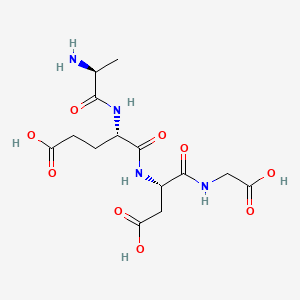
Source: PubChem
Dosage--This PRODUCT IS INTENDED AS A RESEARCH CHEMICAL ONLY. This designation allows the use of research chemicals strictly for in vitro testing and laboratory experimentation only. All product information available on this website is for educational purposes only. This product should only be handled by licensed, qualified professionals. This product is not a drug, food, or cosmetic and may not be misbranded, misused or mislabeled as a drug, food or cosmetic.
Additional Taxes may apply for shipping to GCC
100% Authentic
Made in USA
Authorised distributor
3 - 10 days delivery
Click to read - How we deliver to India
Disclaimer
Product Information Sheet
: Not a diet substitute. Seek Medical guidance if unsure before use.
Epithalon (also known as Epitalon) is a synthetic tetrapeptide (Ala-Glu-Asp-Gly) derived from the natural pineal peptide epithalamin. It has been studied extensively in longevity and aging research for its role as a bioregulator of cellular processes.
Mechanistic Claims
- Telomerase Activation: Stimulates telomerase activity, enabling elongation and maintenance of telomeres, the protective caps at the ends of chromosomes.
- Telomere Length Regulation: Shown to preserve or extend telomere length in preclinical models, potentially delaying cellular senescence.
- Pineal Gland Modulation: Influences melatonin secretion and circadian rhythm regulation, contributing to systemic anti-aging effects.
- Antioxidant & Anti-Aging Pathways: Reduces oxidative stress markers and supports mitochondrial function.
- Gene Expression Regulation: Modulates expression of genes associated with stress resistance, apoptosis, and DNA repair.
Research Applications
- Longevity and anti-aging studies
- Telomere biology and telomerase modulation
- Circadian rhythm and pineal gland function
- Oxidative stress and mitochondrial resilience
- DNA repair and genomic stability investigations
Epithalon Research Insights
Epithalon (also spelled Epitalon) is a synthetic tetrapeptide consisting of four amino acids: Alanine-Glutamic Acid-Aspartic Acid-Glycine (Ala-Glu-Asp-Gly). It was developed and primarily studied in Russia by researchers at the St. Petersburg Institute of Bioregulation and Gerontology.
The peptide was designed to mimic epithalamin, a natural extract from the pineal gland. Its key characteristics include:
-
Purported anti-aging properties
-
Potential to stimulate production of telomerase (an enzyme that can help maintain telomere length)
-
Possible regulation of melatonin production and circadian rhythms
-
Studies suggesting effects on immune function
Most research on Epithalon has been conducted in Russia, with some animal studies showing potential lifespan extension effects.
Telomere Dynamics and Telomerase Activity
Epithalon has been shown to activate telomerase in various cell types. Studies indicate that Epithalon can induce the expression of the telomerase catalytic subunit and enhance its enzymatic activity, leading to telomere elongation in human somatic cells. This activation of telomerase suggests a potential mechanism by which Epithalon may prolong the lifespan of cells and possibly the organism as a whole1.
Research demonstrates that Epithalon can significantly retard cellular senescence by reducing telomere shortening and promoting telomere elongation. In aging models, Epithalon-treated cells showed increased telomere length and extended proliferative potential, effectively overcoming the Hayflick limit, which is the typical division limit of somatic cells2.
Longevity and Anti-Aging Effects
Epithalon has been shown to increase the lifespan of various organisms. In mice, it increased the lifespan of the last 10% of survivors by 13.3% and the maximum lifespan by 12.3%3. In Drosophila melanogaster, it extended lifespan by 11-16% at very low concentrations4.
Epithalon can retard cellular senescence by reducing telomere shortening and increasing telomerase activity, which helps prolong cell lifespan5. It decreases the frequency of chromosome aberrations, indicating an antimutagenic effect that may contribute to its geroprotective properties6.
In oocytes, Epithalon reduces reactive oxygen species and improves mitochondrial function, which may delay aging processes7. In older primates, Epithalon has been shown to restore age-related hormonal imbalances, such as increasing melatonin levels and improving glucose metabolism8.
Epithalon influences gene expression related to aging and stress responses, potentially through interactions with DNA9.
Antioxidant Properties
Epithalon has been shown to reduce intracellular ROS levels, which are harmful byproducts of cellular metabolism that can lead to oxidative stress and cellular damage10. This reduction in ROS is associated with improved mitochondrial function and decreased apoptosis in aging oocytes, suggesting a protective role against cellular aging7.
Studies indicate that Epithalon’s antioxidant properties can surpass those of melatonin in certain contexts. While both compounds are produced by the pineal gland, Epithalon not only acts as a direct antioxidant but also stimulates the production of antioxidant enzymes, providing a broader protective effect10.
Tumor Inhibition
Epithalon has demonstrated significant inhibitory effects on the development of spontaneous mammary tumors in HER-2/neu transgenic mice. Studies show that Epithalon treatment reduces both the cumulative number and size of tumors, and decreases the number of mice with multiple tumors11.
In rat models, Epithalon has been shown to inhibit colon carcinogenesis induced by 1,2-dimethylhydrazine (DMH). The peptide reduces the number and size of colon tumors, particularly when administered throughout the carcinogenesis process12.
The antitumor effects of Epithalon are partly attributed to its ability to downregulate oncogene expression, such as HER-2/neu in mammary tumors11.
References
-
Khavinson, V., Bondarev, I., & Butyugov, A. (2003). Epithalon Peptide Induces Telomerase Activity and Telomere Elongation in Human Somatic Cells. Bulletin of Experimental Biology and Medicine, 135, 590-592. https://doi.org/10.1023/A:1025493705728.
-
Shi-Liang, T. (2007). Retarding the cellular senescence by Epithalon and changes of telomere length and telomerase activity in the retarding process. Journal of Chongqing College of Education.
-
Anisimov, V., Khavinson, V., Popovich, I., Zabezhinski, M., Alimova, I., Rosenfeld, S., Zavarzina, N., Semenchenko, A., & Yashin, A. (2004). Effect of Epitalon on biomarkers of aging, life span and spontaneous tumor incidence in female Swiss-derived SHR mice. Biogerontology, 4, 193-202. https://doi.org/10.1023/A:1025114230714.
-
Khavinson, V., Izmaylov, D., Obukhova, L., & Malinin, V. (2000). Effect of epitalon on the lifespan increase in Drosophila melanogaster . Mechanisms of Ageing and Development, 120, 141-149. https://doi.org/10.1016/S0047-6374(00)00217-7.
-
Khavinson, V., Bondarev, I., Butyugov, A., & Smirnova, T. (2004). Peptide Promotes Overcoming of the Division Limit in Human Somatic Cell. Bulletin of Experimental Biology and Medicine, 137, 503-506. https://doi.org/10.1023/B:BEBM.0000038164.49947.8c.
-
Rosenfeld, S., Togo, E., Mikheev, V., Popovich, I., Zabezhinskii, M., Khavinson, V., & Anisimov, V. (2002). Effect of Epithalon on the Incidence of Chromosome Aberrations in Senescence-Accelerated Mice. Bulletin of Experimental Biology and Medicine, 133, 274-276. https://doi.org/10.1023/A:1015899003974.
-
Yue, X., Liu, S., Guo, J., Meng, T., Zhang, X., Li, H., Song, C., Wang, Z., Schatten, H., Sun, Q., & Guo, X. (2022). Epitalon protects against post-ovulatory aging-related damage of mouse oocytes in vitro. Aging (Albany NY), 14, 3191 – 3202. https://doi.org/10.18632/aging.204007.
-
Goncharova, N., Vengerin, A., Khavinson, V., & Lapin, B. (2005). Pineal peptides restore the age-related disturbances in hormonal functions of the pineal gland and the pancreas. Experimental Gerontology, 40, 51-57. https://doi.org/10.1016/j.exger.2004.10.004.
-
Khavinson, V., & Malinin, V. (2005). Gerontological Aspects of Genome Peptide Regulation. . https://doi.org/10.1159/isbn.978-3-318-01193-7.
-
Kozina, L., Arutjunyan, A., & Khavinson, V. (2007). Antioxidant properties of geroprotective peptides of the pineal gland.. Archives of gerontology and geriatrics, 44 Suppl 1, 213-6 . https://doi.org/10.1016/J.ARCHGER.2007.01.029.
-
Anisimov, V., Khavinsov, V., Alimova, I., Provintsiali, M., Manchini, R., & Francheski, K. (2002). Epithalon Inhibits Tumor Growth and Expression of HER-2/neu Oncogene in Breast Tumors in Transgenic Mice Characterized by Accelerated Aging. Bulletin of Experimental Biology and Medicine, 133, 167-170. https://doi.org/10.1023/A:1015555023692.
-
Anisimov, V., Khavinson, V., Popovich, I., & Zabezhinski, M. (2002). Inhibitory effect of peptide Epitalon on colon carcinogenesis induced by 1,2-dimethylhydrazine in rats.. Cancer letters, 183 1, 1-8 . https://doi.org/10.1016/S0304-3835(02)00090-3.
Peptide Information
|
Property |
Value |
|---|---|
|
Peptide Sequence |
Ala-Glu-Asp-Gly |
|
Molecular Formula |
C14H22N4O9 |
|
Molecular Weight |
390.35 g/mol |
|
CAS Number |
307297-39-8 |
|
PubChem CID |
219042 |
|
Synonyms |
307297-39-8, Glycine, L-alanyl-L-alpha-glutamyl-L-alpha-aspartyl-, Ala-Glu-Asp-Gly |
Epithalon Peptide Structure
Source: PubChem
This PRODUCT IS INTENDED AS A RESEARCH CHEMICAL ONLY. This designation allows the use of research chemicals strictly for in vitro testing and laboratory experimentation only. All product information available on this website is for educational purposes only. This product should only be handled by licensed, qualified professionals. This product is not a drug, food, or cosmetic and may not be misbranded, misused or mislabeled as a drug, food or cosmetic.


