
NAD+ / MOTS-c / 5-Amino-1MQ Blend – 120mg (100mg / 10mg / 10mg) X
Regular price
Rs. 33,329
- Unit price
- per
 100% Authentic
 Made in USA
 Authorised distributor
 1-5 Days delivery
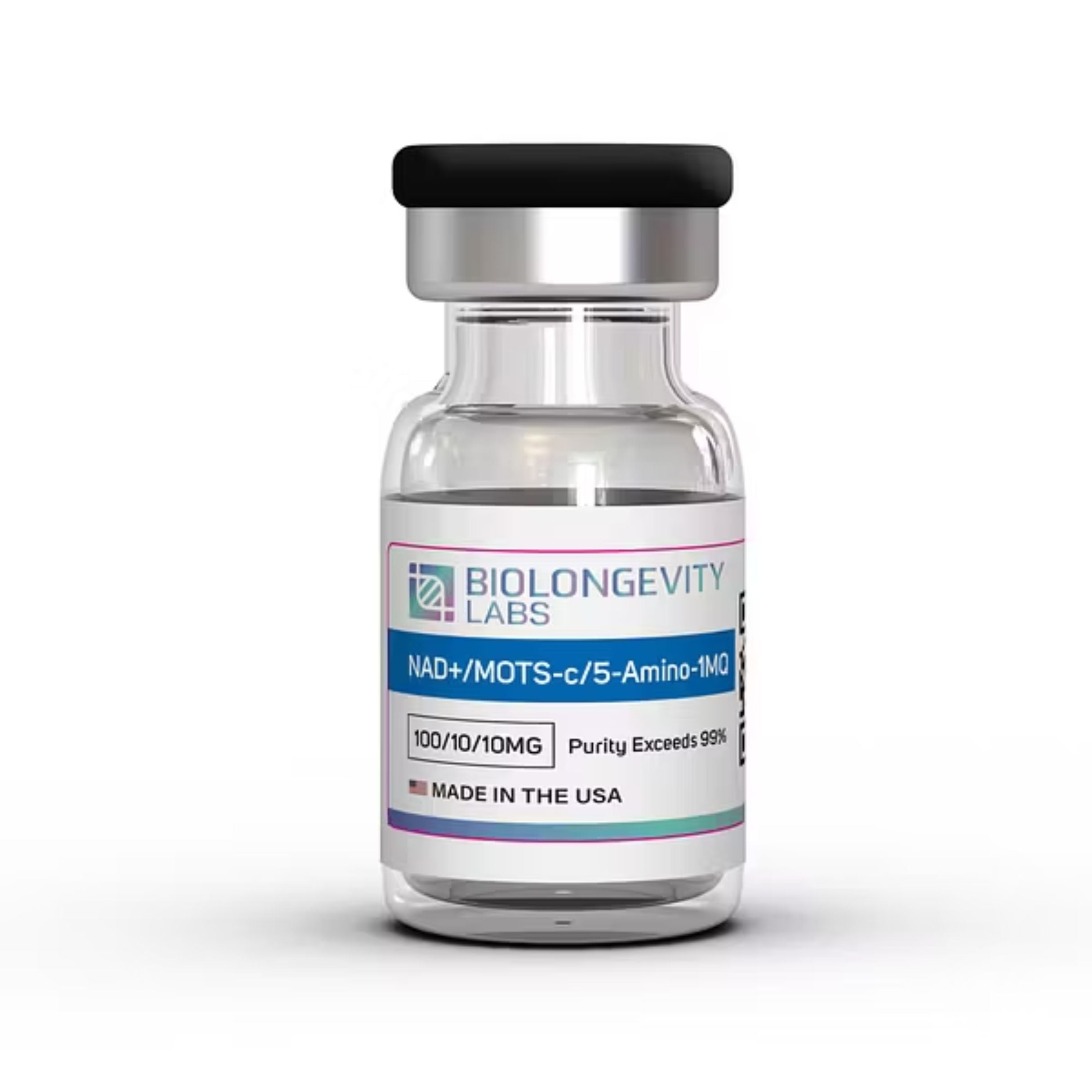
NAD+ / MOTS-c / 5-Amino-1MQ Blend – 120mg (100mg / 10mg / 10mg)
Regular price
Rs. 33,329
- Unit price
- per
Price includes all duties and taxes
SKU: NAD-MOTS-5AM-120MG
FMI's Choice
The BioLongevity Labs NAD+ / MOTS‑c / 5‑Amino‑1MQ Blend unites three distinct compounds that converge on cellular energy, mitochondrial function, and metabolic regulation. Their complementary mechanisms are designed to enhance energy balance, improve metabolic health, and support cognitive and longevity research.
Mechanistic Claims
- NAD+ (100 mg):
- Central redox cofactor for glycolysis, β‑oxidation, and oxidative phosphorylation.
- Substrate for sirtuins and PARPs, supporting DNA repair, gene expression, and stress response.
- Declining levels with age linked to metabolic dysfunction and disease susceptibility.
- MOTS‑c (10 mg):
- Mitochondria‑derived peptide that activates AMPK.
- Regulates nuclear gene expression under metabolic stress.
- Enhances insulin sensitivity and glucose regulation.
- 5‑Amino‑1MQ (10 mg):
- Inhibits NNMT (nicotinamide N‑methyltransferase), raising NAD+ levels.
- Modulates histone methylation and epigenetic regulation.
- Influences fat metabolism and energy balance.
- Synergistic Potential:
-
- Restores NAD+ pools while activating AMPK.
- Reduces adiposity, sustains muscle function, and optimizes glucose metabolism.
- Supports neuroprotection and longevity through effects on oxidative stress, neuroinflammation, and cellular senescence.
Research Applications
- Cellular energy & mitochondrial function studies
- Metabolic regulation & obesity research
- Muscle preservation & physical performance models
- Neuroprotection & cognitive function investigations
- Longevity & anti‑aging mechanisms
- Exploratory preclinical cancer research
Blend Research Insights
- NAD+: Universal coenzyme central to metabolism, DNA repair, and sirtuin activation.
- MOTS‑c: Mitochondria‑derived peptide with AMPK activation and insulin sensitivity effects.
- 5‑Amino‑1MQ: NNMT inhibitor that boosts NAD+ and modulates epigenetic and metabolic pathways.
- Together, these compounds provide a multi‑modal approach to cellular energy, metabolic health, and longevity research.
- Evidence remains largely preclinical, with growing interest in translational applications for aging, metabolic disorders, and neurodegeneration.
Blend Structure
| Ingredient | Dose (per capsule) | Key Actions |
| NAD+ | 100 mg | Cofactor in redox metabolism; activates sirtuins & AMPK; supports DNA repair & mitochondrial biogenesis [1][2][3] |
| MOTS-c | 10 mg | Mitochondria-encoded peptide; AMPK activation; improves insulin sensitivity; prevents metabolic dysfunction [4][5][6] |
| 5-Amino-1MQ | 10 mg | NNMT inhibitor; ↑NAD+; ↓adiposity; epigenetic modulation; metabolic & oncology research [7][8][9] |
NAD+/MOTS-c/5-Amino-1MQ Peptide Blend Research
Cellular Energy & Mitochondrial Function
NAD+ plays a vital role in redox reactions and sirtuin activation. Restoring NAD+ levels in aging and metabolic stress models improved glucose tolerance, mitochondrial function, and overall health [1]. MOTS-c translocates to the nucleus during metabolic stress to regulate antioxidant and glucose metabolism genes via AMPK activation [4]. 5-Amino-1MQ further boosts NAD+ by inhibiting NNMT, enhancing redox balance and mitochondrial efficiency [7].
Metabolic Regulation & Obesity Research
NAD+ depletion contributes to obesity and metabolic disorders; replenishment strategies improve metabolic homeostasis [2]. MOTS-c prevents diet-induced obesity and insulin resistance by improving glucose utilization and maintaining adipose homeostasis [5]. 5-Amino-1MQ reduces white adipose tissue and body weight in preclinical obesity models without affecting appetite, highlighting its direct metabolic actions [8].
Neuroprotection & Longevity
NAD+ enhancement has been shown to reduce neuroinflammation and improve cognition in models of neurodegeneration [3]. MOTS-c enhances memory formation and protects against neuroinflammation, with benefits observed in Alzheimer’s and metabolic dysfunction models [6]. 5-Amino-1MQ alters histone methylation and metabolic programs in cancer and aging models, representing a promising target for longevity and oncology research [9].
References
NAD+
- Rajman L, et al. Cell Metab. 2018. Therapeutic potential of NAD-boosting molecules in vivo. https://doi.org/10.1016/j.cmet.2018.02.011
- Okabe K, et al. J Biomed Sci. 2019. Altered NAD+ metabolism in metabolic disorders. https://doi.org/10.1186/s12929-019-0527-8
-
Zhao Y, et al. J Neuroinflammation. 2021. NAD+ improves cognition via Sirt1/PGC-1α. https://doi.org/10.1186/s12974-021-02250-8
MOTS-c
- Kim K, et al. Cell Metab. 2018. MOTS-c translocates to the nucleus during metabolic stress. https://doi.org/10.1016/j.cmet.2018.06.008
- Lu H, et al. J Mol Med. 2019. MOTS-c regulates adipose homeostasis and prevents metabolic dysfunction. https://doi.org/10.1007/s00109-018-01738-w
- Lee C, et al. Cell Metab. 2015. MOTS-c promotes metabolic homeostasis and reduces obesity/insulin resistance. https://doi.org/10.1016/j.cmet.2015.02.009
5-Amino-1MQ
- Conlon N, Ford D. Biochem Pharmacol. 2022. Systems approach to NAD+ restoration via NNMT inhibition. https://doi.org/10.1016/j.bcp.2022.114946
- Liu J, et al. Biomed Res Int. 2021. NNMT inhibition reduces obesity and diabetes risk. https://doi.org/10.1155/2021/9924314
- Li X, et al. Front Oncol. 2022. NNMT as a biomarker and target in cancer. https://doi.org/10.3389/fonc.2022.894744
Label--Peptide Structures
| Property | NAD+ (Nicotinamide Adenine Dinucleotide) | MOTS-c (Mitochondrial Open Reading Frame of the 12S rRNA-c) | 5-Amino-1MQ (5-Amino-1-methylquinolinium) |
|---|---|---|---|
| Molecular Formula | C₂₁H₂₇N₇O₁₄P₂ | C₁₀₁H₁₅₂N₂₈O₂₂S₂ | C₁₀H₁₁N₂ |
| Molecular Weight | 663.43 g/mol | 2174.6 g/mol | 159.21 g/mol |
| PubChem CID | 925 |
255386757 |
950107 |
| CAS Number | 53-84-9 | 1627580-64-6 | 42464-96-0 |
| Synonyms | β-Nicotinamide adenine dinucleotide, DPN, Coenzyme I, Diphosphopyridine nucleotide | Human MOTS-c, UNII-A5CV6JFB78, MOTS-c trifluoroacetate salt | 5-amino-1-methylquinolinium, SCHEMBL6403148, CHEMBL4116828, ZMJBCEIHNOWCMC-UHFFFAOYSA-O, STL196667 |
Dosage--This PRODUCT IS INTENDED AS A RESEARCH CHEMICAL ONLY. This designation allows the use of research chemicals strictly for in vitro testing and laboratory experimentation only. All product information available on this website is for educational purposes only. This product should only be handled by licensed, qualified professionals.
This content is provided strictly for research purposes and does not constitute an endorsement or recommendation for the non-laboratory application or improper handling of peptides designed for research. The information, including discussions about specific peptides and their researched benefits, is presented for informational purposes only and must not be construed as health, clinical, or legal guidance, nor an encouragement for non-research use in humans. Peptides described here are solely for use in structured scientific study by authorized individuals. We advise consulting with research experts, medical practitioners, or legal counsel prior to any decisions about obtaining or utilizing these peptides. The expectation of responsible, ethical utilization of this information for legitimate investigative and scholarly objectives is paramount. This notice is dynamic and governs all provided content on research peptides.
Additional Taxes may apply for shipping to GCC
100% Authentic
Made in USA
Authorised distributor
3 - 10 days delivery
Click to read - How we deliver to India
Disclaimer
Product Information Sheet
: Not a diet substitute. Seek Medical guidance if unsure before use.
The BioLongevity Labs NAD+ / MOTS‑c / 5‑Amino‑1MQ Blend unites three distinct compounds that converge on cellular energy, mitochondrial function, and metabolic regulation. Their complementary mechanisms are designed to enhance energy balance, improve metabolic health, and support cognitive and longevity research.
Mechanistic Claims
- NAD+ (100 mg):
- Central redox cofactor for glycolysis, β‑oxidation, and oxidative phosphorylation.
- Substrate for sirtuins and PARPs, supporting DNA repair, gene expression, and stress response.
- Declining levels with age linked to metabolic dysfunction and disease susceptibility.
- MOTS‑c (10 mg):
- Mitochondria‑derived peptide that activates AMPK.
- Regulates nuclear gene expression under metabolic stress.
- Enhances insulin sensitivity and glucose regulation.
- 5‑Amino‑1MQ (10 mg):
- Inhibits NNMT (nicotinamide N‑methyltransferase), raising NAD+ levels.
- Modulates histone methylation and epigenetic regulation.
- Influences fat metabolism and energy balance.
- Synergistic Potential:
-
- Restores NAD+ pools while activating AMPK.
- Reduces adiposity, sustains muscle function, and optimizes glucose metabolism.
- Supports neuroprotection and longevity through effects on oxidative stress, neuroinflammation, and cellular senescence.
Research Applications
- Cellular energy & mitochondrial function studies
- Metabolic regulation & obesity research
- Muscle preservation & physical performance models
- Neuroprotection & cognitive function investigations
- Longevity & anti‑aging mechanisms
- Exploratory preclinical cancer research
Blend Research Insights
- NAD+: Universal coenzyme central to metabolism, DNA repair, and sirtuin activation.
- MOTS‑c: Mitochondria‑derived peptide with AMPK activation and insulin sensitivity effects.
- 5‑Amino‑1MQ: NNMT inhibitor that boosts NAD+ and modulates epigenetic and metabolic pathways.
- Together, these compounds provide a multi‑modal approach to cellular energy, metabolic health, and longevity research.
- Evidence remains largely preclinical, with growing interest in translational applications for aging, metabolic disorders, and neurodegeneration.
Blend Structure
| Ingredient | Dose (per capsule) | Key Actions |
| NAD+ | 100 mg | Cofactor in redox metabolism; activates sirtuins & AMPK; supports DNA repair & mitochondrial biogenesis [1][2][3] |
| MOTS-c | 10 mg | Mitochondria-encoded peptide; AMPK activation; improves insulin sensitivity; prevents metabolic dysfunction [4][5][6] |
| 5-Amino-1MQ | 10 mg | NNMT inhibitor; ↑NAD+; ↓adiposity; epigenetic modulation; metabolic & oncology research [7][8][9] |
NAD+/MOTS-c/5-Amino-1MQ Peptide Blend Research
Cellular Energy & Mitochondrial Function
NAD+ plays a vital role in redox reactions and sirtuin activation. Restoring NAD+ levels in aging and metabolic stress models improved glucose tolerance, mitochondrial function, and overall health [1]. MOTS-c translocates to the nucleus during metabolic stress to regulate antioxidant and glucose metabolism genes via AMPK activation [4]. 5-Amino-1MQ further boosts NAD+ by inhibiting NNMT, enhancing redox balance and mitochondrial efficiency [7].
Metabolic Regulation & Obesity Research
NAD+ depletion contributes to obesity and metabolic disorders; replenishment strategies improve metabolic homeostasis [2]. MOTS-c prevents diet-induced obesity and insulin resistance by improving glucose utilization and maintaining adipose homeostasis [5]. 5-Amino-1MQ reduces white adipose tissue and body weight in preclinical obesity models without affecting appetite, highlighting its direct metabolic actions [8].
Neuroprotection & Longevity
NAD+ enhancement has been shown to reduce neuroinflammation and improve cognition in models of neurodegeneration [3]. MOTS-c enhances memory formation and protects against neuroinflammation, with benefits observed in Alzheimer’s and metabolic dysfunction models [6]. 5-Amino-1MQ alters histone methylation and metabolic programs in cancer and aging models, representing a promising target for longevity and oncology research [9].
References
NAD+
- Rajman L, et al. Cell Metab. 2018. Therapeutic potential of NAD-boosting molecules in vivo. https://doi.org/10.1016/j.cmet.2018.02.011
- Okabe K, et al. J Biomed Sci. 2019. Altered NAD+ metabolism in metabolic disorders. https://doi.org/10.1186/s12929-019-0527-8
-
Zhao Y, et al. J Neuroinflammation. 2021. NAD+ improves cognition via Sirt1/PGC-1α. https://doi.org/10.1186/s12974-021-02250-8
MOTS-c
- Kim K, et al. Cell Metab. 2018. MOTS-c translocates to the nucleus during metabolic stress. https://doi.org/10.1016/j.cmet.2018.06.008
- Lu H, et al. J Mol Med. 2019. MOTS-c regulates adipose homeostasis and prevents metabolic dysfunction. https://doi.org/10.1007/s00109-018-01738-w
- Lee C, et al. Cell Metab. 2015. MOTS-c promotes metabolic homeostasis and reduces obesity/insulin resistance. https://doi.org/10.1016/j.cmet.2015.02.009
5-Amino-1MQ
- Conlon N, Ford D. Biochem Pharmacol. 2022. Systems approach to NAD+ restoration via NNMT inhibition. https://doi.org/10.1016/j.bcp.2022.114946
- Liu J, et al. Biomed Res Int. 2021. NNMT inhibition reduces obesity and diabetes risk. https://doi.org/10.1155/2021/9924314
- Li X, et al. Front Oncol. 2022. NNMT as a biomarker and target in cancer. https://doi.org/10.3389/fonc.2022.894744
Peptide Structures
| Property | NAD+ (Nicotinamide Adenine Dinucleotide) | MOTS-c (Mitochondrial Open Reading Frame of the 12S rRNA-c) | 5-Amino-1MQ (5-Amino-1-methylquinolinium) |
|---|---|---|---|
| Molecular Formula | C₂₁H₂₇N₇O₁₄P₂ | C₁₀₁H₁₅₂N₂₈O₂₂S₂ | C₁₀H₁₁N₂ |
| Molecular Weight | 663.43 g/mol | 2174.6 g/mol | 159.21 g/mol |
| PubChem CID | 925 |
255386757 |
950107 |
| CAS Number | 53-84-9 | 1627580-64-6 | 42464-96-0 |
| Synonyms | β-Nicotinamide adenine dinucleotide, DPN, Coenzyme I, Diphosphopyridine nucleotide | Human MOTS-c, UNII-A5CV6JFB78, MOTS-c trifluoroacetate salt | 5-amino-1-methylquinolinium, SCHEMBL6403148, CHEMBL4116828, ZMJBCEIHNOWCMC-UHFFFAOYSA-O, STL196667 |
This PRODUCT IS INTENDED AS A RESEARCH CHEMICAL ONLY. This designation allows the use of research chemicals strictly for in vitro testing and laboratory experimentation only. All product information available on this website is for educational purposes only. This product should only be handled by licensed, qualified professionals.
This content is provided strictly for research purposes and does not constitute an endorsement or recommendation for the non-laboratory application or improper handling of peptides designed for research. The information, including discussions about specific peptides and their researched benefits, is presented for informational purposes only and must not be construed as health, clinical, or legal guidance, nor an encouragement for non-research use in humans. Peptides described here are solely for use in structured scientific study by authorized individuals. We advise consulting with research experts, medical practitioners, or legal counsel prior to any decisions about obtaining or utilizing these peptides. The expectation of responsible, ethical utilization of this information for legitimate investigative and scholarly objectives is paramount. This notice is dynamic and governs all provided content on research peptides.


