
N-Acetyl Semax Amidate X 20mg
Regular price
Rs. 8,222
- Unit price
- per
 100% Authentic
 Made in USA
 Authorised distributor
 1-5 Days delivery

N-Acetyl Semax Amidate X 20mg
Regular price
Rs. 8,222
- Unit price
- per
Price includes all duties and taxes
SKU: NASEM-20MG
FMI's Choice
N‑Acetyl Semax Amidate is a stabilized synthetic heptapeptide derived from the ACTH(4‑7) fragment, structurally defined as Ac‑Met‑Glu‑His‑Phe‑Pro‑Gly‑Pro‑NH₂. It incorporates N‑terminal acetylation and C‑terminal amidation, modifications that enhance resistance to enzymatic degradation and extend biological activity. These structural adaptations increase peptide stability, prolong half‑life (approximately 30 minutes longer than standard Semax), and improve neuroprotective efficacy.
Mechanistic Claims
- Melanocortin Receptor Modulation: Interacts with MC₄ and MC₅ receptors, influencing pathways linked to cognition, stress response, and neuroprotection.
- Neurotransmitter Regulation: Modulates serotonin and dopamine activity, supporting mood and cognitive processes.
- BDNF Upregulation: Enhances brain‑derived neurotrophic factor (BDNF) expression, promoting neuroplasticity and regeneration.
- Structural Stability: N‑acetylation and amidation confer resistance to enzymatic breakdown, extending biological activity.
- Extended Half‑Life: Demonstrates longer duration of action compared to standard Semax formulations.
Research Applications
- Cognitive enhancement and memory studies
- Neuroprotection and neuroregeneration models
- Stroke recovery and ischemic injury investigations
- Neurodegenerative disease research (e.g., Alzheimer’s, Parkinson’s)
- Stress response and mood regulation studies
N‑Acetyl Semax Amidate Research Insights
- Synthetic heptapeptide engineered for enhanced stability and efficacy.
- Structural modifications (acetylation and amidation) improve resistance to enzymatic degradation.
- Demonstrates prolonged half‑life and increased neuroprotective potential compared to standard Semax.
- Preclinical studies highlight roles in cognitive enhancement, neurotransmitter modulation, and BDNF upregulation.
- Investigated for therapeutic potential in stroke recovery, neurodegenerative disorders, and stress‑related conditions.
N-Acetyl Semax Research
N-Acetyl Semax is a synthetic heptapeptide demonstrating neuroprotective and cognitive-enhancing properties. Research indicates its potential in preventing amyloid beta aggregation, providing neuroprotection in ischemic conditions, and enhancing learning and memory functions. The peptide achieves these effects through modulation of neurotransmitter systems and regulation of inflammatory responses, while also showing promise in stress response and immune system function.
Neuroprotective and Cognitive Effects
Semax has been shown to prevent the formation of amyloid beta (Aβ) complexes with copper ions, which are implicated in Alzheimer’s disease, inhibiting fibrillogenesis and providing protective effects against neurodegeneration.1
The peptide has additionally been found to exert neuroprotective effects in the context of ischemic brain conditions. It enhances angioprotective, antihypoxic, and neurotrophic activities, which are crucial during the acute period of ischemic stroke. Furthermore, Semax administration has been associated with the modulation of inflammatory responses, promoting anti-inflammatory agents over pro-inflammatory factors, which is beneficial in post-ischemic conditions.2
Semax is recognized for its nootropic effects, which include improvements in cognitive functions such as learning and memory. In animal models, Semax has been shown to enhance cognitive recovery in cases of chronic brain ischemia, particularly when used in combination with hopantenic acid.3
The mechanisms underlying the potential cognitive and neuroprotective effects of Semax involve its interaction with various neurotransmitter systems and neurotrophic factors. Semax modulates monoaminergic systems, particularly serotonin and dopamine, which are crucial for mood regulation and cognitive functions. Semax increases serotonin turnover and enhances dopamine release, which can improve learning and memory.4
Moreover, Semax has been observed to increase brain-derived neurotrophic factor (BDNF) levels in the basal forebrain, a region associated with cognitive functions, further supporting its role in enhancing cognitive abilities.5
Semax and Alzheimer’s Disease (AD)
Semax is an ACTH-like peptide that has shown the ability to form stable complexes with Cu2+ ions. This property is crucial as it helps prevent the formation of Aβ:Cu2+ complexes, which are implicated in the pathogenesis of AD. Studies have demonstrated that Semax can inhibit fibrillogenesis, particularly the formation of oligomeric species, thereby exhibiting anti-aggregating properties.1
Research has indicated that Semax can enhance the survival of cholinergic neurons in the basal forebrain, which are known to degenerate in Alzheimer’s dementia. In vitro studies have shown that Semax can increase the survival rate of these neurons by approximately 1.5-1.7 fold and stimulate the activity of choline acetyltransferase, an enzyme critical for acetylcholine synthesis.6
While the exact implications of Semax in Alzheimer’s disease require further clarification, its ability to modulate Aβ aggregation and support neuronal survival presents a promising avenue for therapeutic development. Continued research is necessary to explore the full potential of Semax, including its delivery methods and efficacy in clinical settings.
Semax and Stress Response
Semax has demonstrated significant immunomodulatory properties in models of “social” stress. It effectively restores cellular and humoral immune responses, as well as the phagocytic activity of neutrophils, indicating its potential as an immune corrector under stress conditions7. Additionally, Semax helps in normalizing the levels of pro- and anti-inflammatory cytokines, such as IL-1β, IL-6, and TNF-α, which are typically elevated under stress.8
Research indicates that Semax can block the opioid form of stress-induced analgesia (SIA) without affecting behavioral changes in rats exposed to acute stressors such as inescapable foot shock and forced cold-water swim stress. This suggests that while Semax can modulate pain sensitivity under stress, it does not alter stress-induced behavioral responses.9
In conditions of informational and social stress, Semax exhibits stress-protective effects by reducing stress-induced physiological changes, such as adrenal hypertrophy and gastric mucosa lesions. It also shows antioxidant properties by decreasing lipid peroxidation in immunocompetent organs like the thymus and spleen, thereby mitigating stress-induced immune dysfunction.10
Immune and Vascular System Modulation
In a study on rat brain focal ischemia, Semax was found to enhance the expression of genes related to the immune system, particularly those encoding immunoglobulins and chemokines, which are crucial for immune cell activity and mobility.11 This immunomodulatory effect was further supported by research demonstrating Semax’s ability to restore cellular and humoral immune responses and phagocytic activity of neutrophils under “social” stress conditions, indicating its potential as an effective immune corrector.7
In addition to its effects on the immune system, Semax also modulates the vascular system. In ischemic conditions, Semax altered the expression of genes associated with the development and migration of endothelial tissue, smooth muscle cell migration, hematopoiesis, and vasculogenesis.11
References
- Sciacca, M., Naletova, I., Giuffrida, M., & Attanasio, F. (2022). Semax, a Synthetic Regulatory Peptide, Affects Copper-Induced Abeta Aggregation and Amyloid Formation in Artificial Membrane Models. ACS Chemical Neuroscience, 13, 486 – 496. https://doi.org/10.1021/acschemneuro.1c00707.
- Miasoedova, N., Skvortsova, V., Nasonov, E., Zhuravleva, E., Grivennikov, I., Arsen’eva, E., & Sukhanov, I. (1999). [Investigation of mechanisms of neuro-protective effect of semax in acute period of ischemic stroke].. Zhurnal nevrologii i psikhiatrii imeni S.S. Korsakova, 99 5, 15-9. https://pubmed.ncbi.nlm.nih.gov/17603664/.
- Kirchev, V. (2023). Cognitive function restoration in rats with chronic brain ischemia using Semax and hopantenic acid comprehensive administration. Journal of Education, Health and Sport. https://doi.org/10.12775/jehs.2023.13.04.046.
- Eremin, K., Kudrin, V., Grivennikov, I., Miasoedov, N., & Rayevsky, K. (2004). Effects of Semax on Dopaminergic and Serotoninergic Systems of the Brain. Doklady Biological Sciences, 394, 1-3. https://doi.org/10.1023/B:DOBS.0000017114.24474.40.
- Dolotov, O., Karpenko, E., Seredenina, T., Inozemtseva, L., Levitskaya, N., Zolotarev, Y., Kamensky, A., Grivennikov, I., Engele, J., & Myasoedov, N. (2006). Semax, an analogue of adrenocorticotropin (4–10), binds specifically and increases levels of brain‐derived neurotrophic factor protein in rat basal forebrain. Journal of Neurochemistry, 97. https://doi.org/10.1111/j.1471-4159.2006.03658.x.
- Grivennikov, I., Dolotov, O., Zolotarev, Y., Andreeva, L., Myasoedov, N., Leacher, L., Black, I., & Dreyfus, C. (2008). Effects of behaviorally active ACTH (4-10) analogue – Semax on rat basal forebrain cholinergic neurons.. Restorative neurology and neuroscience, 26 1, 35-43. https://pubmed.ncbi.nlm.nih.gov/18431004/.
- Yasenyavskaya, A., Samotrueva, M., Myasoedov, N., & Andreeva, L. (2022). The experimental study of the immunomodulating action of Semax and Selank on the model of „social” stress. European Pharmaceutical Journal, 69, 54 – 60. https://doi.org/10.2478/afpuc-2022-0004.
- Yasenyavskaya, A., Samotrueva, M., Tsibizova, A., Bashkina, O., Andreeva, L., & Myasoedov, N. (2022). Influence of Semax on the Level of Pro- and Anti-Inflammatory Cytokines in Conditions of “Social” Stress. Current Drug Therapy. https://doi.org/10.2174/1574885517666220831155411.
- Glazova, N., Myasoedov, N., Limborska, S., Dergunova, L., Kamensky, A., Andreeva, L., Sebentsova, E., Vilensky, D., Manchenko, D., & Levitskaya, N. (2023). Effects of Semax in the Models of Acute Stress. Российский физиологический журнал им И М Сеченова. https://doi.org/10.31857/s0869813923010053.
- Samotrueva, M., Yasenyavskaya, A., Murtalieva, V., Myasoedov, N., & Andreeva, L. (2019). INFLUENCE OF SEMAX ON THE INTENSITY OF LIPID PEROXIDATION IN IMMUNOCOMPETENT ORGANS IN THE CONDITIONS OF “SOCIAL” STRESS. , 19, 188-191. https://doi.org/10.17816/maj191s1188-191.
- Medvedeva, E., Dmitrieva, V., Povarova, O., Limborska, S., Skvortsova, V., Myasoedov, N., & Dergunova, L. (2014). The peptide semax affects the expression of genes related to the immune and vascular systems in rat brain focal ischemia: genome-wide transcriptional analysis. BMC Genomics, 15, 228 – 228. https://doi.org/10.1186/1471-2164-15-228.
Label--Peptide Information
| Property | Value |
|---|---|
| Peptide Sequence | Ac-Met-Glu-His-Phe-Pro-Gly-Pro-NH2 |
| Molecular Formula | C37H51N9O10S |
| Molecular Weight | 813.9 g/mol |
| CAS Number | 80714-61-0 |
| PubChem CID | 9811102 |
| Synonyms | Semax, 80714-61-0, ACTH (4-7), Pro-Gly-Pro-, MEHFPGP, Met-Glu-His-Phe-Pro-Gly-Pro |
Semax Peptide Structure
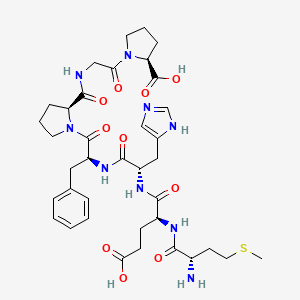
Source: PubChem
Dosage--This PRODUCT IS INTENDED AS A RESEARCH CHEMICAL ONLY. This designation allows the use of research chemicals strictly for in vitro testing and laboratory experimentation only. All product information available on this website is for educational purposes only. This product should only be handled by licensed, qualified professionals. This product is not a drug, food, or cosmetic and may not be misbranded, misused or mislabeled as a drug.
Additional Taxes may apply for shipping to GCC
100% Authentic
Made in USA
Authorised distributor
3 - 10 days delivery
Click to read - How we deliver to India
Disclaimer
Product Information Sheet
: Not a diet substitute. Seek Medical guidance if unsure before use.
N‑Acetyl Semax Amidate is a stabilized synthetic heptapeptide derived from the ACTH(4‑7) fragment, structurally defined as Ac‑Met‑Glu‑His‑Phe‑Pro‑Gly‑Pro‑NH₂. It incorporates N‑terminal acetylation and C‑terminal amidation, modifications that enhance resistance to enzymatic degradation and extend biological activity. These structural adaptations increase peptide stability, prolong half‑life (approximately 30 minutes longer than standard Semax), and improve neuroprotective efficacy.
Mechanistic Claims
- Melanocortin Receptor Modulation: Interacts with MC₄ and MC₅ receptors, influencing pathways linked to cognition, stress response, and neuroprotection.
- Neurotransmitter Regulation: Modulates serotonin and dopamine activity, supporting mood and cognitive processes.
- BDNF Upregulation: Enhances brain‑derived neurotrophic factor (BDNF) expression, promoting neuroplasticity and regeneration.
- Structural Stability: N‑acetylation and amidation confer resistance to enzymatic breakdown, extending biological activity.
- Extended Half‑Life: Demonstrates longer duration of action compared to standard Semax formulations.
Research Applications
- Cognitive enhancement and memory studies
- Neuroprotection and neuroregeneration models
- Stroke recovery and ischemic injury investigations
- Neurodegenerative disease research (e.g., Alzheimer’s, Parkinson’s)
- Stress response and mood regulation studies
N‑Acetyl Semax Amidate Research Insights
- Synthetic heptapeptide engineered for enhanced stability and efficacy.
- Structural modifications (acetylation and amidation) improve resistance to enzymatic degradation.
- Demonstrates prolonged half‑life and increased neuroprotective potential compared to standard Semax.
- Preclinical studies highlight roles in cognitive enhancement, neurotransmitter modulation, and BDNF upregulation.
- Investigated for therapeutic potential in stroke recovery, neurodegenerative disorders, and stress‑related conditions.
N-Acetyl Semax Research
N-Acetyl Semax is a synthetic heptapeptide demonstrating neuroprotective and cognitive-enhancing properties. Research indicates its potential in preventing amyloid beta aggregation, providing neuroprotection in ischemic conditions, and enhancing learning and memory functions. The peptide achieves these effects through modulation of neurotransmitter systems and regulation of inflammatory responses, while also showing promise in stress response and immune system function.
Neuroprotective and Cognitive Effects
Semax has been shown to prevent the formation of amyloid beta (Aβ) complexes with copper ions, which are implicated in Alzheimer’s disease, inhibiting fibrillogenesis and providing protective effects against neurodegeneration.1
The peptide has additionally been found to exert neuroprotective effects in the context of ischemic brain conditions. It enhances angioprotective, antihypoxic, and neurotrophic activities, which are crucial during the acute period of ischemic stroke. Furthermore, Semax administration has been associated with the modulation of inflammatory responses, promoting anti-inflammatory agents over pro-inflammatory factors, which is beneficial in post-ischemic conditions.2
Semax is recognized for its nootropic effects, which include improvements in cognitive functions such as learning and memory. In animal models, Semax has been shown to enhance cognitive recovery in cases of chronic brain ischemia, particularly when used in combination with hopantenic acid.3
The mechanisms underlying the potential cognitive and neuroprotective effects of Semax involve its interaction with various neurotransmitter systems and neurotrophic factors. Semax modulates monoaminergic systems, particularly serotonin and dopamine, which are crucial for mood regulation and cognitive functions. Semax increases serotonin turnover and enhances dopamine release, which can improve learning and memory.4
Moreover, Semax has been observed to increase brain-derived neurotrophic factor (BDNF) levels in the basal forebrain, a region associated with cognitive functions, further supporting its role in enhancing cognitive abilities.5
Semax and Alzheimer’s Disease (AD)
Semax is an ACTH-like peptide that has shown the ability to form stable complexes with Cu2+ ions. This property is crucial as it helps prevent the formation of Aβ:Cu2+ complexes, which are implicated in the pathogenesis of AD. Studies have demonstrated that Semax can inhibit fibrillogenesis, particularly the formation of oligomeric species, thereby exhibiting anti-aggregating properties.1
Research has indicated that Semax can enhance the survival of cholinergic neurons in the basal forebrain, which are known to degenerate in Alzheimer’s dementia. In vitro studies have shown that Semax can increase the survival rate of these neurons by approximately 1.5-1.7 fold and stimulate the activity of choline acetyltransferase, an enzyme critical for acetylcholine synthesis.6
While the exact implications of Semax in Alzheimer’s disease require further clarification, its ability to modulate Aβ aggregation and support neuronal survival presents a promising avenue for therapeutic development. Continued research is necessary to explore the full potential of Semax, including its delivery methods and efficacy in clinical settings.
Semax and Stress Response
Semax has demonstrated significant immunomodulatory properties in models of “social” stress. It effectively restores cellular and humoral immune responses, as well as the phagocytic activity of neutrophils, indicating its potential as an immune corrector under stress conditions7. Additionally, Semax helps in normalizing the levels of pro- and anti-inflammatory cytokines, such as IL-1β, IL-6, and TNF-α, which are typically elevated under stress.8
Research indicates that Semax can block the opioid form of stress-induced analgesia (SIA) without affecting behavioral changes in rats exposed to acute stressors such as inescapable foot shock and forced cold-water swim stress. This suggests that while Semax can modulate pain sensitivity under stress, it does not alter stress-induced behavioral responses.9
In conditions of informational and social stress, Semax exhibits stress-protective effects by reducing stress-induced physiological changes, such as adrenal hypertrophy and gastric mucosa lesions. It also shows antioxidant properties by decreasing lipid peroxidation in immunocompetent organs like the thymus and spleen, thereby mitigating stress-induced immune dysfunction.10
Immune and Vascular System Modulation
In a study on rat brain focal ischemia, Semax was found to enhance the expression of genes related to the immune system, particularly those encoding immunoglobulins and chemokines, which are crucial for immune cell activity and mobility.11 This immunomodulatory effect was further supported by research demonstrating Semax’s ability to restore cellular and humoral immune responses and phagocytic activity of neutrophils under “social” stress conditions, indicating its potential as an effective immune corrector.7
In addition to its effects on the immune system, Semax also modulates the vascular system. In ischemic conditions, Semax altered the expression of genes associated with the development and migration of endothelial tissue, smooth muscle cell migration, hematopoiesis, and vasculogenesis.11
References
- Sciacca, M., Naletova, I., Giuffrida, M., & Attanasio, F. (2022). Semax, a Synthetic Regulatory Peptide, Affects Copper-Induced Abeta Aggregation and Amyloid Formation in Artificial Membrane Models. ACS Chemical Neuroscience, 13, 486 – 496. https://doi.org/10.1021/acschemneuro.1c00707.
- Miasoedova, N., Skvortsova, V., Nasonov, E., Zhuravleva, E., Grivennikov, I., Arsen’eva, E., & Sukhanov, I. (1999). [Investigation of mechanisms of neuro-protective effect of semax in acute period of ischemic stroke].. Zhurnal nevrologii i psikhiatrii imeni S.S. Korsakova, 99 5, 15-9. https://pubmed.ncbi.nlm.nih.gov/17603664/.
- Kirchev, V. (2023). Cognitive function restoration in rats with chronic brain ischemia using Semax and hopantenic acid comprehensive administration. Journal of Education, Health and Sport. https://doi.org/10.12775/jehs.2023.13.04.046.
- Eremin, K., Kudrin, V., Grivennikov, I., Miasoedov, N., & Rayevsky, K. (2004). Effects of Semax on Dopaminergic and Serotoninergic Systems of the Brain. Doklady Biological Sciences, 394, 1-3. https://doi.org/10.1023/B:DOBS.0000017114.24474.40.
- Dolotov, O., Karpenko, E., Seredenina, T., Inozemtseva, L., Levitskaya, N., Zolotarev, Y., Kamensky, A., Grivennikov, I., Engele, J., & Myasoedov, N. (2006). Semax, an analogue of adrenocorticotropin (4–10), binds specifically and increases levels of brain‐derived neurotrophic factor protein in rat basal forebrain. Journal of Neurochemistry, 97. https://doi.org/10.1111/j.1471-4159.2006.03658.x.
- Grivennikov, I., Dolotov, O., Zolotarev, Y., Andreeva, L., Myasoedov, N., Leacher, L., Black, I., & Dreyfus, C. (2008). Effects of behaviorally active ACTH (4-10) analogue – Semax on rat basal forebrain cholinergic neurons.. Restorative neurology and neuroscience, 26 1, 35-43. https://pubmed.ncbi.nlm.nih.gov/18431004/.
- Yasenyavskaya, A., Samotrueva, M., Myasoedov, N., & Andreeva, L. (2022). The experimental study of the immunomodulating action of Semax and Selank on the model of „social” stress. European Pharmaceutical Journal, 69, 54 – 60. https://doi.org/10.2478/afpuc-2022-0004.
- Yasenyavskaya, A., Samotrueva, M., Tsibizova, A., Bashkina, O., Andreeva, L., & Myasoedov, N. (2022). Influence of Semax on the Level of Pro- and Anti-Inflammatory Cytokines in Conditions of “Social” Stress. Current Drug Therapy. https://doi.org/10.2174/1574885517666220831155411.
- Glazova, N., Myasoedov, N., Limborska, S., Dergunova, L., Kamensky, A., Andreeva, L., Sebentsova, E., Vilensky, D., Manchenko, D., & Levitskaya, N. (2023). Effects of Semax in the Models of Acute Stress. Российский физиологический журнал им И М Сеченова. https://doi.org/10.31857/s0869813923010053.
- Samotrueva, M., Yasenyavskaya, A., Murtalieva, V., Myasoedov, N., & Andreeva, L. (2019). INFLUENCE OF SEMAX ON THE INTENSITY OF LIPID PEROXIDATION IN IMMUNOCOMPETENT ORGANS IN THE CONDITIONS OF “SOCIAL” STRESS. , 19, 188-191. https://doi.org/10.17816/maj191s1188-191.
- Medvedeva, E., Dmitrieva, V., Povarova, O., Limborska, S., Skvortsova, V., Myasoedov, N., & Dergunova, L. (2014). The peptide semax affects the expression of genes related to the immune and vascular systems in rat brain focal ischemia: genome-wide transcriptional analysis. BMC Genomics, 15, 228 – 228. https://doi.org/10.1186/1471-2164-15-228.
Peptide Information
| Property | Value |
|---|---|
| Peptide Sequence | Ac-Met-Glu-His-Phe-Pro-Gly-Pro-NH2 |
| Molecular Formula | C37H51N9O10S |
| Molecular Weight | 813.9 g/mol |
| CAS Number | 80714-61-0 |
| PubChem CID | 9811102 |
| Synonyms | Semax, 80714-61-0, ACTH (4-7), Pro-Gly-Pro-, MEHFPGP, Met-Glu-His-Phe-Pro-Gly-Pro |
Semax Peptide Structure
Source: PubChem
This PRODUCT IS INTENDED AS A RESEARCH CHEMICAL ONLY. This designation allows the use of research chemicals strictly for in vitro testing and laboratory experimentation only. All product information available on this website is for educational purposes only. This product should only be handled by licensed, qualified professionals. This product is not a drug, food, or cosmetic and may not be misbranded, misused or mislabeled as a drug.


